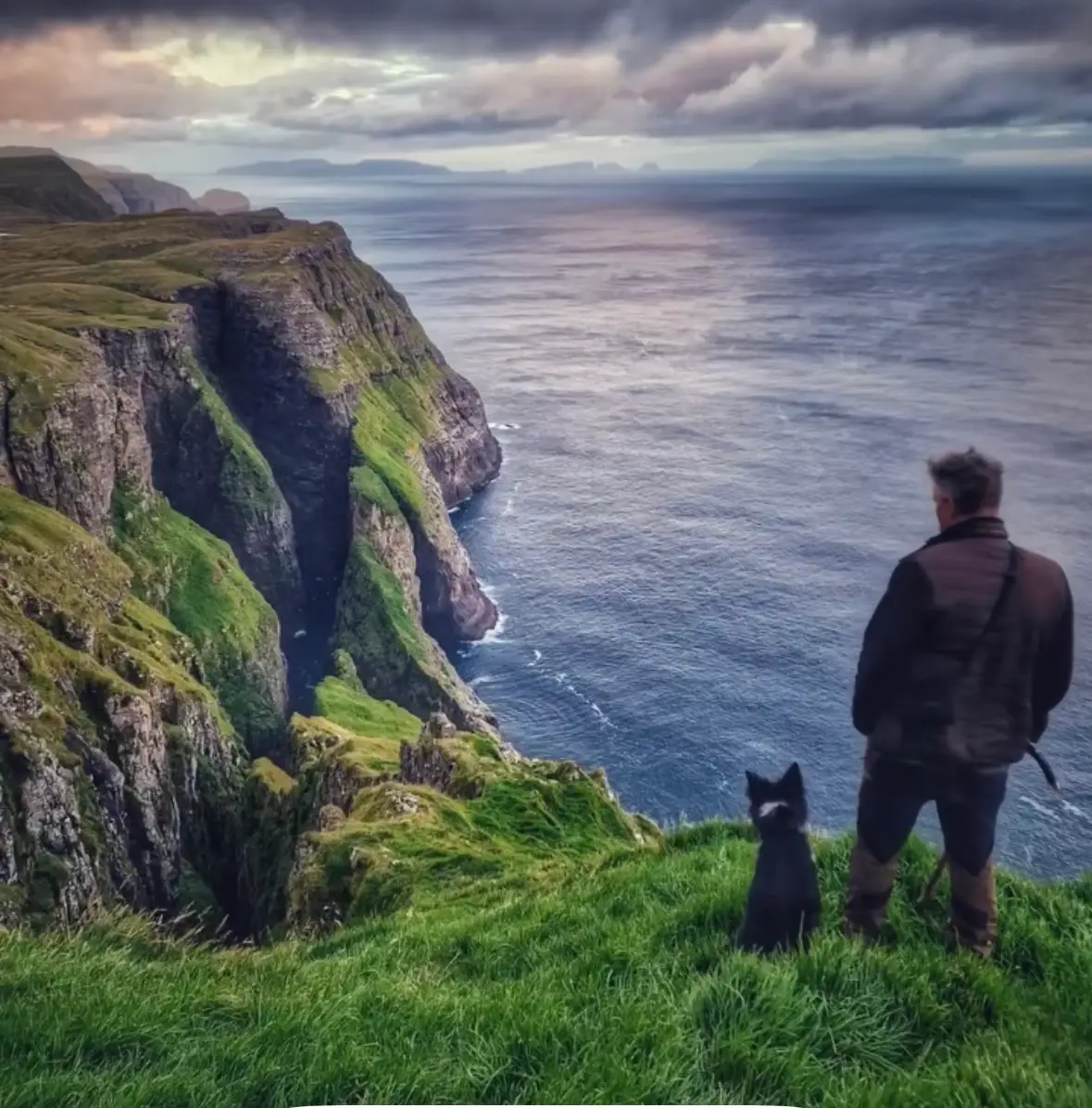
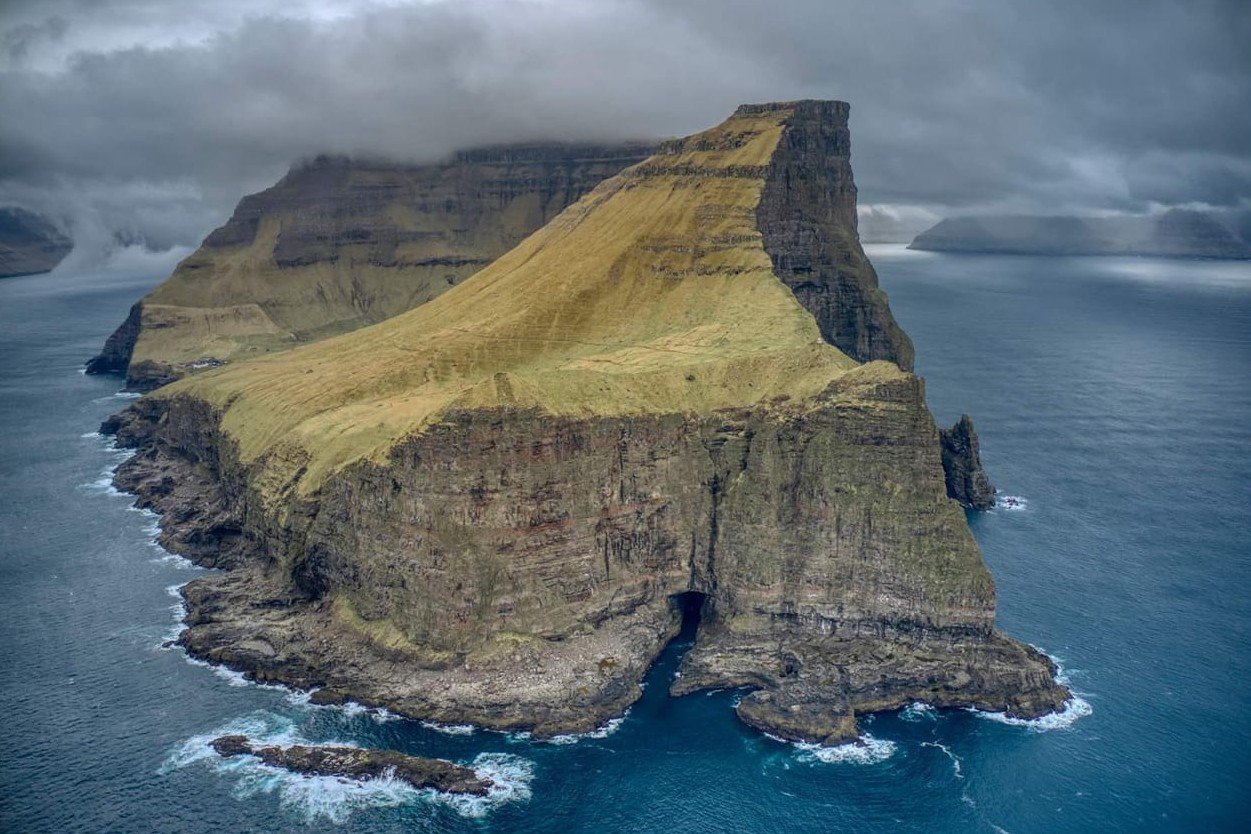
Wild mountains rising straight from the North Atlantic, tiny villages tucked between steep green slopes, waterfalls falling into the ocean and some of Europe’s most dramatic coastlines — the Faroe Islands are unlike almost anywhere else.
Located between Iceland and Scotland, this small archipelago of 18 islands is compact enough to explore on one trip, yet varied enough that every island feels different.
Whether you are planning a short stopover or a full week of exploring, this Faroe Islands travel guide covers the essentials: when to visit, how to get here, how to get around, where to stay, what to see and the experiences worth making time for.
The Faroe Islands are an archipelago in the North Atlantic Ocean, located roughly between Iceland, Norway and Scotland.
The islands are a self-governing nation within the Kingdom of Denmark and have their own language, culture and identity.
Despite their remote appearance, the Faroe Islands are surprisingly well connected. Roads, bridges, ferries and subsea tunnels link most of the main islands, making it possible to experience very different landscapes within relatively short distances.
Tórshavn, located on Streymoy, is the capital and largest town. Vágar is home to the international airport and some of the country’s most famous landscapes, including Múlafossur, Bøur, Trælanípa and views towards Tindhólmur and Drangarnir.
Most international visitors arrive by air at Vágar Airport.
Direct flights connect the Faroe Islands with several Nordic and European destinations, with Copenhagen being the most important year-round connection. Routes and frequencies vary throughout the year, so it is worth checking available connections when planning your trip.
You can also travel to the Faroe Islands by sea aboard the Norröna ferry operated by Smyril Line.
The ferry connects the Faroe Islands with Denmark and Iceland and is particularly useful for travellers who want to bring their own vehicle.
Once you arrive at Vágar Airport, Tórshavn is approximately a 45-minute drive away through the subsea tunnel connecting Vágar and Streymoy.
For flights, ferry information, airport transport and other arrival information, read our complete guide to getting to the Faroe Islands.
There is no single best month to visit. The right time depends on what you want to experience.
May brings longer days and the beginning of the main outdoor season. The landscape becomes greener, seabirds return and there are generally fewer visitors than during peak summer.
June offers some of the longest days of the year and is an excellent month for hiking, photography, road trips and boat tours.
July is one of the busiest months, with long days, active birdlife and the widest selection of tours and experiences. Booking accommodation, rental cars and popular experiences in advance is recommended.
August still offers excellent conditions for exploring, hiking and boat trips, particularly during the first half of the month. Puffins and other seabirds begin leaving later in the summer.
September is quieter and can be an excellent choice for travellers who prefer fewer visitors. Days become shorter and the weather more unpredictable, but most of the country remains accessible.
The Faroe Islands can also be visited outside the main season.
Autumn and winter bring dramatic weather, short days and a much quieter atmosphere. However, some seasonal experiences, hiking routes and boat services may not operate, so your itinerary needs to be more flexible.
For a more detailed month-by-month comparison, see our guide to the best time to visit the Faroe Islands.
You can see a surprising amount in only a few days, but we generally recommend giving yourself enough time to account for changing weather.
Three days gives you enough time for some of the major highlights around Vágar, Streymoy and Eysturoy.
It works well as a short stopover, although your itinerary will be relatively busy.
Five days gives you much more flexibility.
You can explore the main sights without rushing and add an island such as Mykines or Kalsoy, depending on the season and weather.
A week is ideal for many first-time visitors.
It gives you time for the major attractions, a few slower days, boat trips or hikes and some flexibility if the weather changes your plans.
For detailed routes, explore our Faroe Islands itinerary ideas, including suggested 3-day, 5-day and 7-day itineraries.
Despite the landscape, getting around the Faroe Islands is relatively straightforward.
An impressive network of roads, bridges and subsea tunnels connects most of the main islands.
For most independent travellers, renting a car offers the greatest flexibility.
Distances are short, and having your own vehicle makes it easier to adapt your plans around the weather.
Roads are generally in good condition, but you should be prepared for narrow roads, single-lane tunnels, rapidly changing weather, sheep on or beside the road, strong winds and limited parking at some popular locations.
Headlights must be used while driving, and speed limits are generally lower than in many larger European countries.
Never drive off-road.
Several islands are connected by subsea tunnels.
Some of these tunnels require a toll, and there are no traditional toll booths. If you are renting a car, ask the rental company how tunnel charges are handled, as procedures and fees can vary between companies.
Exploring without a rental car is possible.
Public buses and ferries connect towns, villages and islands throughout the country, although services to smaller villages can be limited.
If you plan to rely on public transport, build your itinerary around the current timetable rather than assuming that buses run frequently.
Our full Getting Around the Faroe Islands guide covers driving, ferries, buses and other transport options in greater detail.
Where you stay depends on how you plan to explore.
Tórshavn is the most convenient base for restaurants, cafés and evening life.
Its central location also makes it a practical starting point for exploring Streymoy, Eysturoy and the northern islands.
Vágar is an excellent choice if nature is the priority.
Staying here puts you close to Múlafossur, Bøur, Sørvágsvatn, Trælanípa and the departure points for several boat experiences.
It is also convenient for arrivals and departures through Vágar Airport.
Staying in smaller villages can give you a completely different experience.
Guesthouses and holiday homes throughout the islands allow you to wake up surrounded by the landscapes you came to see.
For a longer trip, consider dividing your stay between two areas rather than using one base for the entire journey.
You could spend weeks exploring the islands, but several places stand out for a first visit. You can also browse our complete collection of Faroe Islands attractions when planning your itinerary.
Mykines is the westernmost island in the Faroe Islands and one of the country’s best-known destinations for birdlife and dramatic coastal scenery.
During the summer season, visitors come to experience the island’s landscape and see Atlantic puffins at close range.
Access depends heavily on weather and seasonal transport, so Mykines should always be planned with some flexibility.
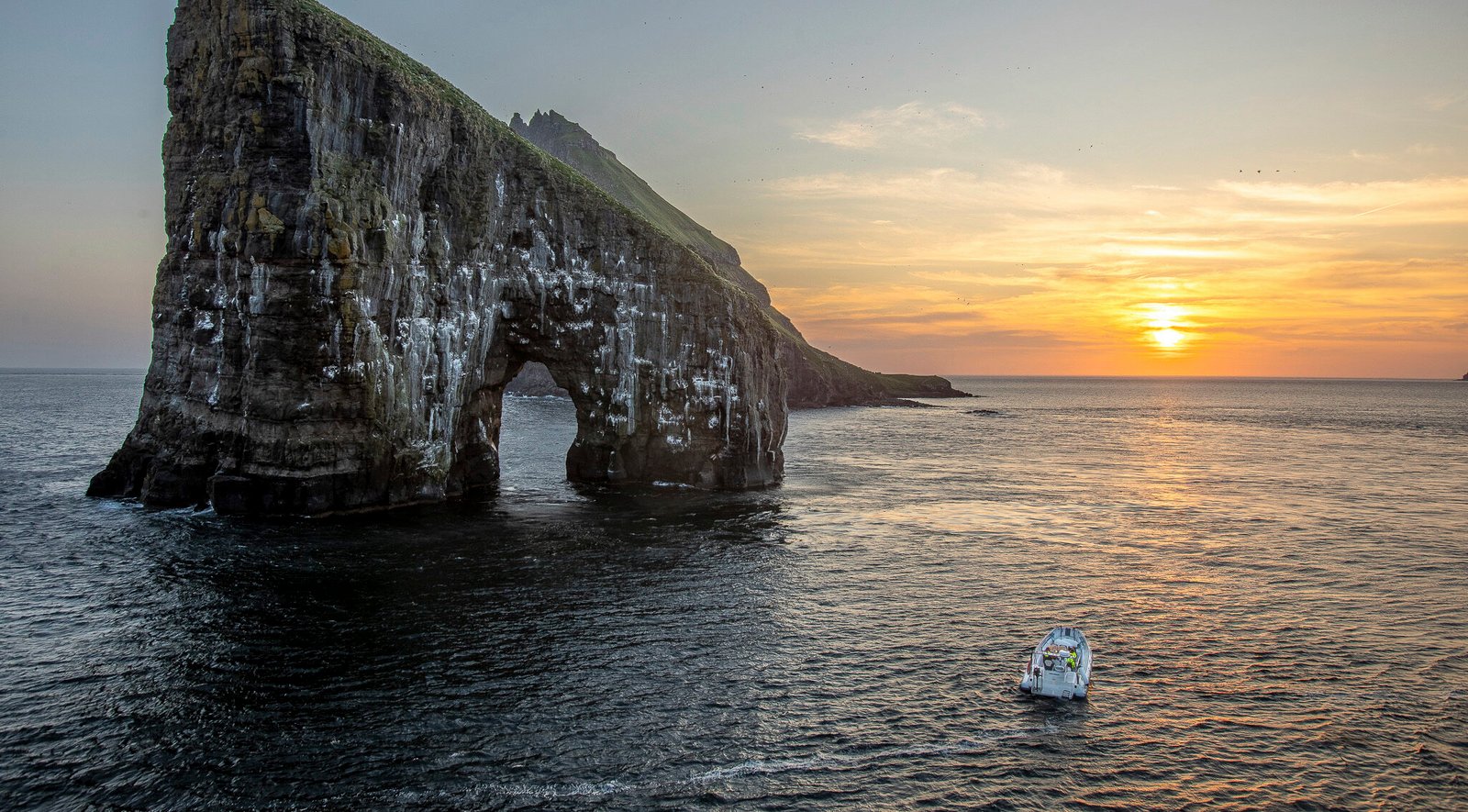
Rising from the ocean between Vágar and Tindhólmur, Drangarnir is one of the most recognisable natural landmarks in the Faroe Islands.
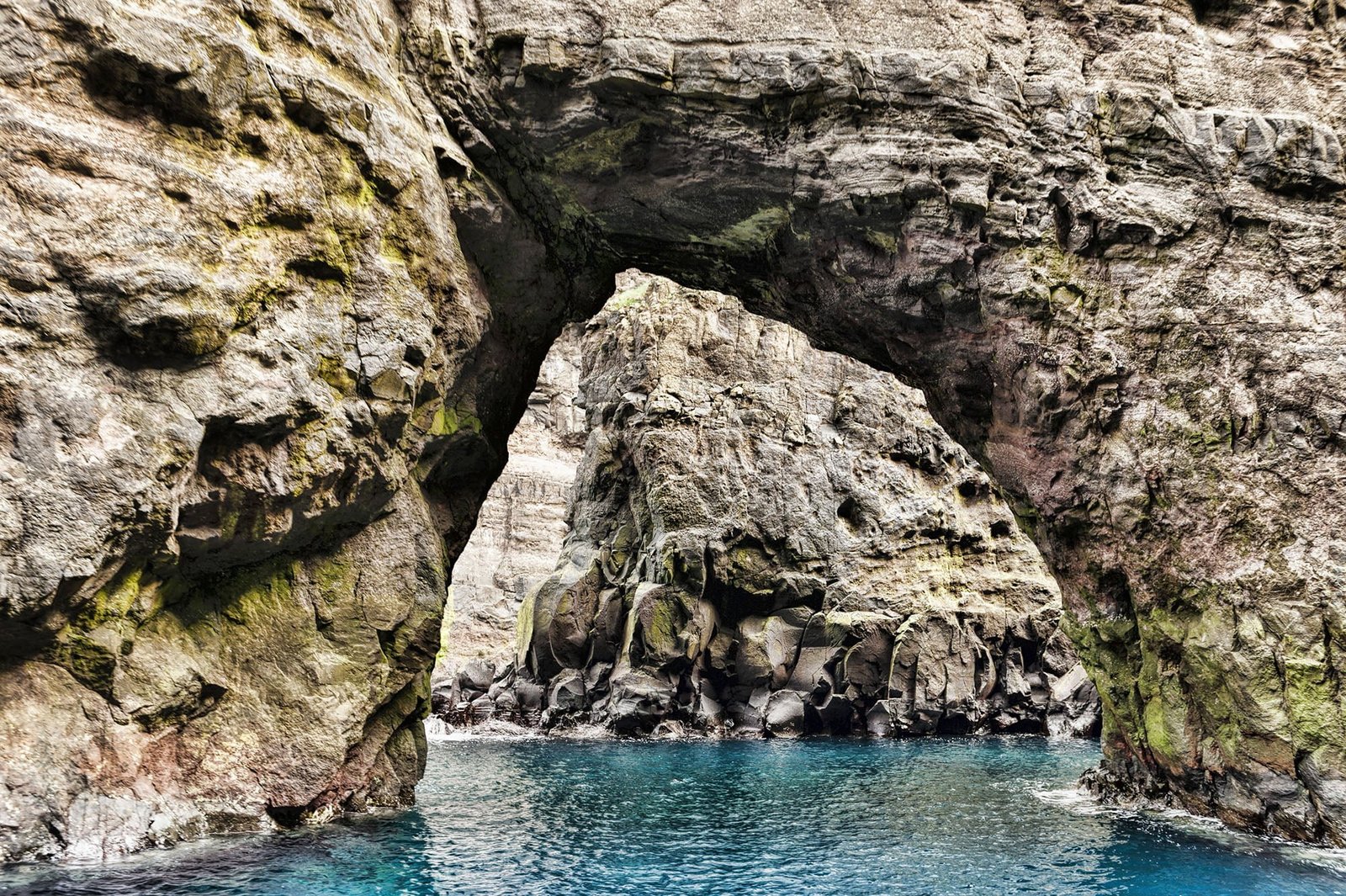
The enormous sea stack and its natural arch are particularly impressive from the water.
A boat tour from Sørvágur is one of the easiest ways to experience Drangarnir and the surrounding coastline.
Múlafossur Waterfall is the famous waterfall at Gásadalur on Vágar.
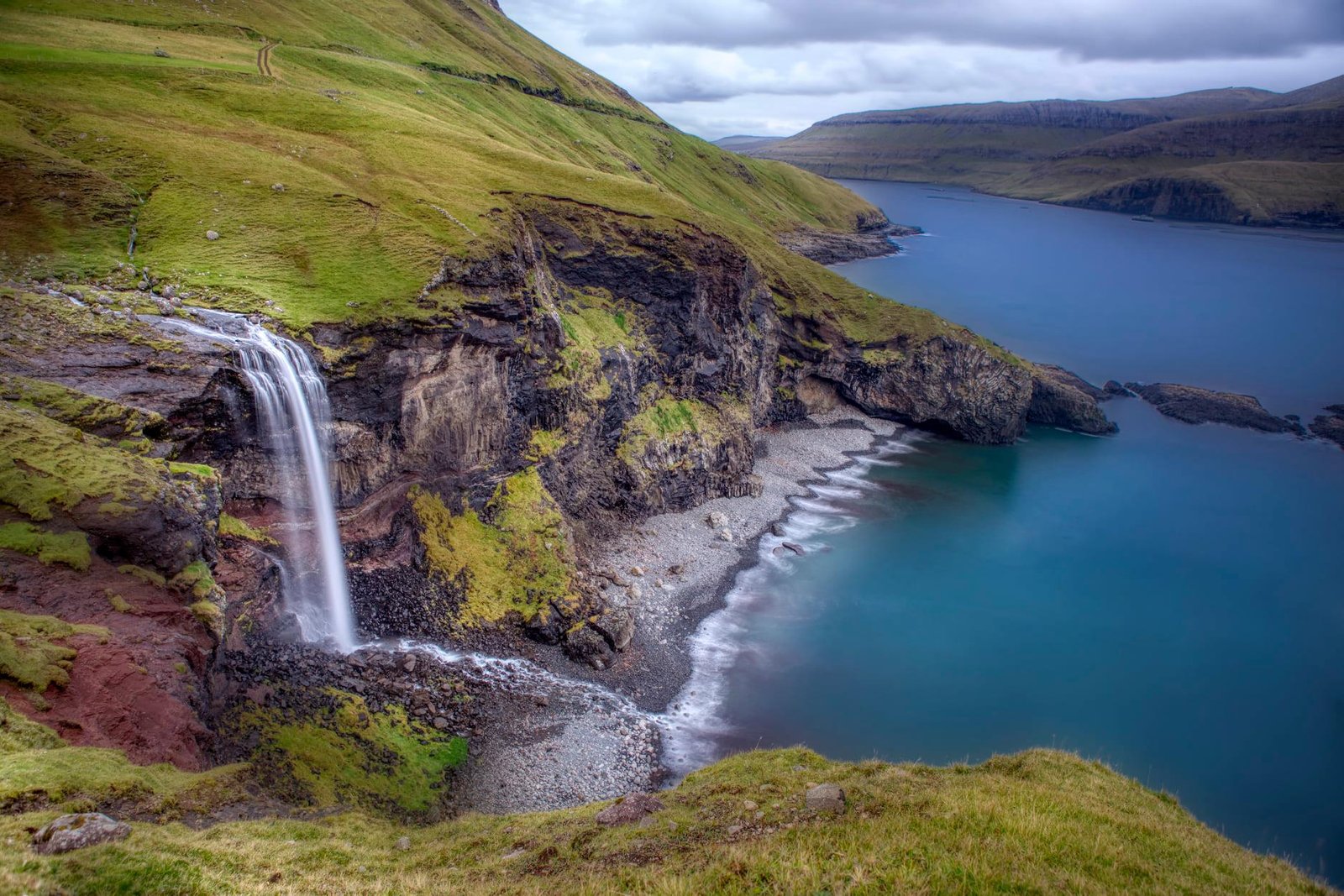
The waterfall drops from the green cliffs directly towards the Atlantic, with the village and surrounding mountains creating one of the country’s most recognisable views.
From the cliffs at Trælanípa, Sørvágsvatn appears to sit high above the ocean.
The famous illusion has made this one of the most photographed views in the Faroe Islands.
The experience requires a hike across privately managed land, so always check the current access conditions before visiting.
Saksun sits at the end of a long valley surrounded by steep mountains.
Its turf-roofed buildings, church and tidal lagoon make it one of the most atmospheric villages in the country.
Located at the end of a dramatic valley on northern Streymoy, Tjørnuvík overlooks the sea stacks Risin and Kellingin.
The village also has a small black-sand beach and is an excellent stop when exploring northern Streymoy.
Gjógv is named after the natural sea gorge running into the village.
Colourful houses, surrounding mountains and coastal walking routes make it one of the most popular villages on Eysturoy.
The hike to Kallur Lighthouse on Kalsoy leads to one of the most dramatic viewpoints in the Faroe Islands.
Steep mountains fall towards the ocean on both sides, creating the landscape that has made Kalsoy internationally famous.
Always check current hiking access and conditions before setting out.
Bøur is a tiny village on Vágar with one of the country’s most impressive coastal views.
From the village you can look directly towards Tindhólmur and Drangarnir.
With its distinctive jagged peaks, Tindhólmur is one of the most recognisable islets in the Faroe Islands.
It can be seen from several viewpoints around western Vágar and is especially impressive from the water.
The landscape is the main attraction, but the best trips involve experiencing it in different ways.
Some of the Faroe Islands’ most dramatic landscapes are best seen from the sea.
Boat tours can take you beneath towering cliffs, through narrow sounds and close to landmarks that cannot be fully appreciated from land.
Popular boat experiences include Drangarnir, Vestmanna, Mykines and seasonal wildlife trips.
Walking remains one of the best ways to experience the Faroese landscape.
Routes range from relatively short walks to challenging mountain hikes.
Some trails cross private land and require payment or a local guide, so never assume that a route is freely accessible simply because you have seen it on social media or an old travel blog.
The Faroe Islands are home to large populations of seabirds.
Atlantic puffins are among the most popular, with birds generally present from late spring through the summer before returning to sea.
Mykines is the best-known destination, but puffins and other seabirds can also be experienced elsewhere around the islands.
For locations, seasonality and practical advice, read our ultimate Faroe Islands puffin guide.
A guided tour can be particularly valuable if you have limited time or do not want to drive.
Local guides can combine major attractions with stories, history and places you may otherwise drive straight past.
Nature may bring you here, but Faroese culture is an important part of the experience.
Try local seafood, lamb and traditional Faroese dishes, explore Tórshavn’s old town and, if possible, experience home dining or another local food experience.
The mountains may look inviting, but hiking here should be taken seriously.
Weather can change quickly, fog can reduce visibility within minutes and many cliffs have no barriers.
Before hiking:
check the weather forecast
research the route
wear proper footwear
bring waterproof and windproof layers
stay on marked routes where available
keep away from cliff edges
tell someone where you are going
check whether the trail requires payment or a guide
Access rules can change because much of the Faroese countryside is privately owned and actively used for farming.
For that reason, check current local information rather than relying entirely on older blogs or social media posts.
For many visitors, seeing an Atlantic puffin is one of the highlights of the trip.
Puffins are seasonal visitors and are generally present from around late April until late August, although nature never follows an exact calendar.
Mykines is the most famous puffin destination, but colonies and seabird areas can also be found elsewhere.
If seeing puffins is a major reason for your trip, visit during the summer season and allow flexibility for weather-related changes.
Read our Faroe Islands puffin guide for more detailed information.
Faroese weather has one defining characteristic:
It changes quickly.
Sunshine, rain, fog and strong wind can all appear within the same day.
Rather than allowing the weather to ruin your itinerary, plan around it.
Keep some flexibility between days and check local conditions each morning before committing to a long hike or exposed viewpoint.
A cloudy morning does not necessarily mean a cloudy afternoon.
Likewise, good weather in Tórshavn does not guarantee good weather on Mykines or Vágar.
If weather is an important part of deciding when to travel, our Best Time to Visit the Faroe Islands guide compares the seasons in more detail.
Even in summer, prepare for wind and rain.
Useful items include:
waterproof jacket
windproof outer layer
warm mid-layer
comfortable waterproof footwear
hat and gloves outside the warmest periods
small backpack
reusable water bottle
portable phone charger
camera protection
several layers rather than one heavy jacket
Good footwear matters particularly if you plan to hike.
For a complete checklist by season, see our Faroe Islands packing guide.
The currency of the Faroe Islands is the Danish krone (DKK).
Faroese banknotes circulate alongside Danish notes and have the same value.
Card payments are widely accepted, and most visitors can travel without carrying significant amounts of cash.
The Faroe Islands are not generally considered a budget destination. Accommodation, restaurants, rental cars and guided experiences can be relatively expensive, so plan your budget before arriving.
Booking important parts of your trip in advance can also make the total cost easier to manage.
Mobile coverage is generally very good, including across much of the countryside.
Before travelling, check whether your existing mobile plan includes roaming in the Faroe Islands. Do not automatically assume that EU roaming rules apply in exactly the same way as they do within the European Union.
Wi-Fi is widely available at hotels, guesthouses, cafés and restaurants.
Faroese food reflects the country’s relationship with the North Atlantic.
Fish, shellfish and lamb feature heavily, alongside traditional methods such as fermentation and air-drying.
Tórshavn has the largest selection of restaurants, ranging from casual cafés to ambitious Nordic dining.
Outside the capital, opening hours and options can be more limited, particularly outside summer.
If there is a particular restaurant you want to visit, reserve a table in advance.
For something more personal, look for Faroese home-dining experiences where visitors eat in a local home and learn about Faroese food and everyday life directly from their hosts.
Distances look small on a map, but viewpoints, hikes and weather changes make everything take longer than expected.
Leave space in your itinerary.
Much of the countryside is privately owned.
Follow signs and marked paths, respect closures and pay required hiking fees.
If conditions are unsafe, change your plans.
No photograph or viewpoint is worth taking unnecessary risks for.
During summer, accommodation, rental cars, ferries and popular tours can fill up.
If something is essential to your trip, reserve it before arriving.
Boat tours, ferries and outdoor activities can be affected by North Atlantic weather.
Having alternative plans makes travelling here much easier.
The best Faroe Islands trips combine famous landscapes with time to slow down and explore.
Start by deciding how many days you have, then build your trip around a few experiences that matter most to you.
Explore our Faroe Islands itinerary ideas for suggested 3-day, 5-day and 7-day routes.
Discover places such as Mykines, Drangarnir, Múlafossur, Trælanípa, Saksun, Tjørnuvík, Bøur and Kallur Lighthouse in our attraction guides.
Or browse all our Faroe Islands attractions to discover more places for your trip.
The weather may change your plans while you are here.
Very often, that becomes part of the experience.
For most first-time visitors, May through September offers the easiest combination of long days, outdoor activities and seasonal tours. June, July and August are particularly popular, while May and September can offer a quieter experience.
Read our detailed guide to the best time to visit the Faroe Islands for a seasonal comparison.
Five to seven days is a good amount of time for a first trip. Three days can work for a short visit, while a full week gives you more flexibility for weather, islands, hikes and boat tours.
Our Faroe Islands itinerary ideas can help you build a route around the time you have available.
No, but renting a car makes independent travel considerably more flexible. Public buses and ferries can take you around much of the country, but services to smaller villages may be limited.
See our complete Getting Around the Faroe Islands guide for more information.
The Faroe Islands are relatively expensive compared with many European destinations. Accommodation, eating out, rental cars and guided experiences should all be included when planning your budget.
The currency is the Danish krone (DKK). Faroese banknotes have the same value as Danish banknotes. Cards are widely accepted.
Puffins are generally present from late April until late August. Summer is the best period if seeing puffins is an important part of your trip.
See our ultimate Faroe Islands puffin guide for where and how to see them.
Yes. The Faroe Islands are well suited to independent travel. However, some hiking areas require payment or a guide, and guided experiences can provide access, local knowledge and transportation that are difficult to arrange independently.
Yes. English is widely understood, particularly within tourism, hotels, restaurants and other visitor services.
Yes, the Northern Lights can sometimes be seen during the darker months when skies are clear and solar activity is strong. However, cloud cover is common, so the Faroe Islands should not be chosen solely as a Northern Lights destination.
The Faroe Islands are a self-governing nation within the Kingdom of Denmark. They have their own language, parliament and extensive autonomy.